Who killed Police Officer Benjamin Franklin Yost? A Mollie Maguire Story


Chapter 17 - Officer McCarron Went to Carroll’s Tavern after the Assassination

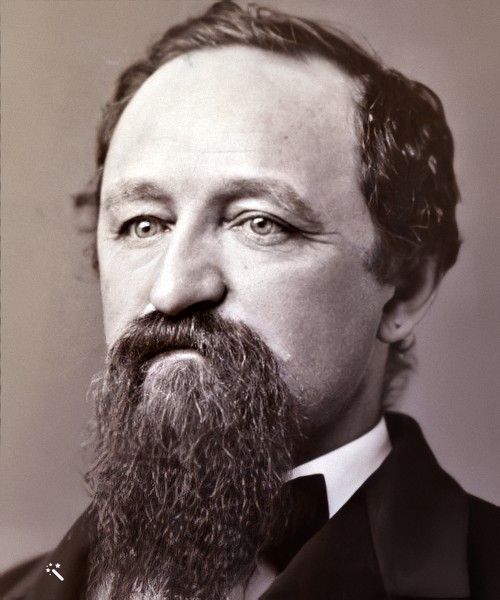
            Early in the evening of July 5th, 1877, Officers Yost and McCarron, while patrolling the streets of Tamaqua, stopped at Carroll’s Tavern. Inside, James Kerrigan admitted that he was present and had interacted with both officers. Through Charles Albright’s closing arguments, we find that after McCarron summoned a doctor for his dying partner, McCarron immediately tries to pursue the murderer(s). His actions reflect his thinking that the murderer returned to Carroll’s Tavern. Albright states:


                                                            Charles Albright, Esq.

            “But the fact has come out in this case that after Yost was shot, Barney McCarron went to James Carroll’s house; of all houses, of all saloons in the town, that is the place he went to; he went into an alley way, or into the back yard, and tried to see or listen if he could discover the assassins of Yost, for Yost had seen these men; had made some remarks which, after Yost was shot, came back to McCarron’s mind, and he no doubt thought he might apprehend the men at Carroll’s who killed Yost. Why then did McCarron go to Carroll’s?” (Albright’s closing arguments, West, page 12).

            The prosecution tried, but failed to explain this behavior of Officer McCarron. Several witnesses were present that could testify to the fact that both Yost and McCarron were in Carroll’s Tavern early in the evening of July 5th. Again, several witnesses could present evidence that McCarron returned after Yost was shot. Definitive evidence and was admitted by the prosecution, that Kerrigan was present. Kerrigan’s statements that he was present only to assist McGeehan and Boyle fails to be proven, in that no other witness states that McGeehan and Boyle were present.


Chapter 18 - James McParland’s Reports

            Before continuing with the story as I know it, there is a final observation to be made about McFarland’s reports for July, 1875. Although the covering letter under which they were sent to Mr. Gowen expressly states that they cover the period from July 1 through July 24, 1875, the reports for the five days during which McFarland went to the Tamaqua area to investigate the Yost murder are all missing. The expense accounts for those five days, July 15 through July 19, are included in detail. Only the results of the detective’s investigation are missing. The question of why the notes of activities for those days are missing is a valid inquiry. Their absence casts doubt upon the reliability of the reports as a systemic recording of events at, or near the time, they occurred. Much later, the Pinkertons supplied the District Attorney with a narrative for those days, to be used in obtaining convictions against those whom the Pinkertons accused of the murder of officer Yost and a related murder. However, that the five days were not included in the original report summary to Mr. Gowen permits the inference that their original content differed from what was later given to the District Attorney (Burke, page 141).

I now know after reading McFarland’s expense reports that his testimony in the Yost case was full of other lies. He swore that on July 15, he went to Campbell’s saloon to find out who had shot Yost. His expense report shows he had not gone to Campbell’s; rather he had actually gone to a different saloon. He further swore that on July 17, he went to Campbell’s and got information from his son. The expense account shows he actually went to a different saloon and got information from that saloonkeeper’s son. He testified that after the party to celebrate the opening of McGeehan’s saloon, he went back to Campbell’s place. The expense report shows he went to a different bar entirely (Burke, page 179).


Chapter 19 - Anti-Monopoly Convention

About the 4th of March, 1875, an Anti-Monopoly Convention was appointed to take place at Harrisburg, having for its principal purpose a movement against the Philadelphia and Reading Coal and Iron Company, by individual and other large operators. Among them was Muff Lawler, who reported, on his return, that there were nearly three hundred representatives present, and it was decided to ask the Legislature, by resolution, to cause an investigation to be made, by committee, of the officers of the Philadelphia and Reading Coal and Iron Company, and say why their charter should not be rescinded. 

Proceedings at Harrisburg Yesterday – Speeches and Resolutions – New York Times

Harrisburg, PA, March 3 – The Anti-Monopoly Convention contains representatives from all the labor organizations in New York and Pennsylvania, including the Grangers and retail coal dealers. An address was read by Horace H. Day, of New York, representing the Industrial Congress of the United States, who received a vote of thanks. E.M. Davis, of Philadelphia, also delivered an address on the moneyed power of the country, and its tendency to foster monopolies. The Convention adopted resolutions condemning the passage by the Legislature of any bill which will not hold the employer responsible for the competency of the apprentice when he becomes a master mechanic, urging the passage of some law which will restrain the large corporations from charging excessive rates of transportation, condemning the Philadelphia and Reading Railroad Company for discharging those of its employees who are members of corporate labor organizations, and recommending the enactment of a law by the Legislature appointing a commission to examine into the causes of the difficulties existing between labor and capital, which shall report the testimony taken and the conclusion arrived at to the Legislature at the next session.

The Convention reassembled this afternoon at 2 o’clock in Barr’s Hall, President John F. Walsh, of Schuylkill County, in the chair. A number of resolutions were adopted tending to oppose monopoly, among them the following:

Resolved, That the action of the Philadelphia and Reading Railroad Company in procuring by fraud and deception the charter known originally as the Laurel Run Improvement Company, and now called the Philadelphia and Reading Coal and Iron Company, whereby special privileges of great value to them and danger to the community were granted, and their abuse of said privileges, demand immediate attention. Upon the Legislature of the State we urge the appointment of a joint committee of both Houses to investigate the affairs of both corporations with instructions to report an act repealing all or so much of their charters as may be detrimental or dangerous to the public welfare.

A discussion of one hour took place on the subject of uniting the laboring classes of the United States. Senator Staunton, of Luzerne, addressed the convention on a bill before the Legislature in the interests of the miners and laborers in the coal fields.

An evening session was held for the further discussion of the question of uniting the mechanics, miners, and laboring men of the country. Several delegates from New York addressed the convention.

James McParland Report March 11, 1875

The operative remarks today, that the miners seem to have a great deal of determination and say they will not succumb to the Reading Rail Road Co., under any circumstances. The operative made some quiet inquiry among the Molly Maguires today, in regard to the affairs at Ashton and learned that the Molly Maguires are very numerous in that section. Thomas Fisher of Summit Hill is County Delegate for Carbon County and Pat McKenna of Storm Hill is the Bodymaster, and it is generally thought by the Molly Maguires of Shenandoah City, that the parties who created the disturbance at Ashton, are not only Molly Maguires, but was more belonging to the various secret organizations.

The Legislature of Pennsylvania, listening to the repeated demands of the Anti-Monopoly Convention, appointed a committee to investigate the affairs of the Philadelphia and Reading Company. That commission convened and heard testimony as the complainants could bring before it, as well as the pleadings of the attorneys for the Philadelphia and Reading Company. Mr. Gowen, the President of the Philadelphia and Reading Railway Company, personally appeared before the committee and made answer to the charges. 

It was the sixth of July that the committee was in Pottsville. Franklin Gowen alluded to troubles in the coal region: “It will not do to say that these troubles result from the inadequacy of the price paid for labor, because, without exception, the rates paid are the highest in the world. The high rates have had the effect of attracting to the coal region a surplus of labor, more than sufficient to do the work required; and it is the effort of this surplus to receive an employment which it cannot really get that has led to all these disturbances. I have had printed for your use a statement, from the daily reports coming to me during the strike, of the outrages in the coal region. Here I want to correct an impression that goes out to the public, that these outrages are intended to injure the property of the employer. They are not. We do not believe that they are. They are perpetrated for no other purpose than to intimidate the workingmen themselves and to prevent them from going to work. I shall not read the list; it is at your service; and you can look over it and see the position we have occupied for months. But let me mention a few of the glaring instances of tyranny and oppression. At a colliery, called the Ben Franklin Colliery, the employees of which were perfectly satisfied with their wages, had accepted the reduction early in the season, and were working peacefully and contentedly, the torch of the incendiary was applied to the breaker at night. These men, having families to support, working there contentedly and peacefully, were driven out of employment by a few dangerous men, simply for the purpose of preventing them from earning their daily bread. I had some interest in the subject of the amount of their wages, and I asked the owner of the colliery what his miners were actually earning at the time when they were prevented from working by the burning of the structure in which they were employed, and he told me that the lowest miner on his pay-list earned sixty dollars a month, and the highest one hundred and thirty dollars; and yet, although these men were peaceful, law-abiding men, they were driven out of employment by an incendiary fire. At another colliery, within five or six miles of this, a band of twenty or thirty men, in the evening – almost in broad daylight – went to the breaker, and by force drove the men away and burnt the structure down. It belonged to a poor man. It was a small operation. The savings of his lifetime were probably gone, and his own employees, who had nothing against him, and who were perfectly willing to work, were thrown out of employment, and probably remain out of employment to this day.”

When Franklin Gowen concluded, the committee made its report, showing that there was no ground of action, and that was the last heard of Legislative investigating the Company. In the meantime, Gowen pressed McParland to investigate and report on the officers and members of the Ancient Order of Hibernians, believing that they were the same as the Molly Maguires.

James McParland Report July 8, 1875

            Operative J. Mc.F. reports that the Molly Maguires appear to take but little interest in the investigating committee. There are men in Pottsville from all parts of the County, and they all agree in saying that it is impossible for an Irishman to get a job at present.

James McParland Report July 9, 1875

            The Molly Maguires declare that the investigation was a humbug and say there was nothing in it. They all complain of hard times. At 11AM the investigating committee left Pottsville.

James McParland Report July 20, 1875

            Austin Maley, the Borough Constable, this morning informed the operative, that Charles Haase wanted him, the operative, to try and get bail for him by next Thursday, if possible. He said the operative was the only man in the crowd who had any brains and he thought he could get bail for him if he tried. Operative J.Mc.F. mentioned the subject to McAndrews and Morris, the former said he thought he could get the bail.

James McParland Report July 21, 1875

            The operative had a talk with John Kehoe, County Delegate of Girardville today, he reports everything quiet in his County. Kehoe asked Reilly to go bail for Charles Haase. Reilly said he would, if he could be accepted. Kehoe then requested operative J.Mc.F. to go to Pottsville tomorrow, and take Reilly with him and see if they could get Haase out. Kehoe stands bail for some six or seven men, amounting in the aggregate to some $10,000. He does not own a foot of real estate.

James McParland Report July 22, 1875

            This morning Reilly told the operative that he could not possibly go to Pottsville today, as there was a liquor merchant in town, and he must remain and see him. He said he would willingly give bail for Haase if he could, but as he was not worth $1,000, he did not think there was any use in trying. The operative thought it would be a good plan to see Haase, as perhaps he might be able to gain some important information by him. Therefore he went to Pottsville and had an interview with him in the jail. He told Haase that he had done all in his power to obtain bail for him but had not yet succeeded; this made the prisoner feel very blue. He talked freely with the operative, but did not appear to know anything in particular of the doings of the Molly Maguires. After the operative’s return to Shenandoah, he was told by McAndrews that he would see Colihan, of Gilberton tomorrow, and see if he could obtain bail of him.


                                                                Charles Haase

Charles Haase, who was just from Summit (Hill), where he had gone to secure work and see some relatives, reported that the Laborer’s Union and the Mollies had made common cause in the fight on Summit Hill, headed by Tom Fisher, County Delegate, Pat McKenna, Bodymaster (of Storm Hill), and a prominent Mollie named (Daniel) Boyle, (Bodymaster of Summit Hill). They were determined that, unless the collieries submitted to the general demand, they should not have men to do their work. Now, McParland had testimony to link the officers of the AOH to the troubles of the Labor Union. McParland ascertained the names of some of the officers and members of the AOH, but did not know the first name of the Bodymaster of Summit Hill. McParland just knew the last name of Boyle.

James McParland Report July 24, 1875

            McAndrews and Reilly went to Gilberton yesterday, but failed to obtain the bail, as Colihan said he was not able to be bondsman for $1,000.


                                                     Chapter 20 - Hugh McGeehan

                   Hugh McGeehan was born on or about 1852 in Glenfin, County Donegal, Ireland. He emigrated with some of his family, to the United States sometime after 1870, for he is not listed in the census. He resided in the Storm Hill section of Lansford, Carbon County, Pennsylvania, at the boarding house of Margaret Boyle. Standing 6’ 0” tall, Hugh first made his living as a miner for the Lehigh and Wilkes Barre Coal Company. He had joined the Ancient Order of Hibernians (AOH), Storm Hill chapter and became heavily involved in demonstrating for the rights of workers during the Long Strike of 1875.
       One of these demonstrations, McGeehan headed a parade of striking miners through the Borough of Tamaqua. A contemporary newspaper had this account: “
At noon today a large body of miners from Summit Hill collieries arrived in Tamaqua and made a street demonstration. They were headed by a solitary drummer and a man carrying an American flag. Every person carried a heavy cudgel and looked as if prepared for business. The object of the display was to induce the men working at Colonel Cake’s Philadelphia breaker to strike. The appearance of the strikers made considerable excitement in the town, and the Lehigh men were greeted in a loyal manner by the Schuylkill brethren. Four hundred miners paraded the streets today at Tamaqua. They went to the mines located near this town and found that the men had all quit work. They fired their revolvers in the air and informed the proprietors that they had no objection to coal being mined for the town’s own consumption, but none should be shipped abroad, which was agreed to. They made no disturbance and conducted themselves quietly.”

For his labor activities, he was blacklisted, supposedly by Landsford mine boss John P. Jones. However, William D. Zehner, Superintendent, testified at Hugh's trial that he discharged McGeehan "before we resumed work after the strike."
       On the night of July 5th, 1875, Officer Benjamin Yost is murdered in Tamaqua, Schuylkill County, Pennsylvania. On August 9th, Pinkerton detective James McParland joins McGeehan and Alec Campbell at the Ambrosher's saloon for a drink. Campbell tells McParland he is there to help Hugh McGeehan get a liquor license to open a saloon. On August 14th, Hugh McGeehan opens a tavern in Summit Hill, Carbon County, Pennsylvania, in a building leased from Nathan Clouse and sponsored by Alex Campbell.
       The Vigilance Committee of Tamaqua or the Flying Squadron of the Reading Railroad Police used a more violent approach against those that were labeled ‘Molly Maguires’. Hugh McGeehan was identified on a “Strictly Confidential” handbill, as the murderer of Officer Yost. There were two attempts against his life, for he was shot at by vigilantes, once in late December, 1875, and then again while walking home early in January, 1876. Although he was not wounded, he could point to bullet holes in his clothes (Riffenburgh, page 112).

On January 9th, 1876, Hugh McGeehan marries Maria Duggan, in St. Joseph's Church, of Summit Hill, witnessed by James Walsh and Maria McGee. The honeymoon was short lived, for on February 5th, 1876, McGeehan was arrested for Yost’s murder. On July 24th, after two trials, he is found guilty, with others of the murder of Yost. On June 21, 1877, McGeehan is given capital punishment in the yard of the Schuylkill County prison. His body is taken back to Summit Hill, where he is buried alongside Alex Campbell and James Boyle in St. Joseph’s Cemetery behind the church.


Chapter 21 - John (Jack) Boyle is Killed

            Franklin Gowen’s plan of decimating the remnants of the Ancient Order of Hibernians was coming to fruition, especially at the expense of the Storm Hill Chapter. The Storm Hill AOH Chapter was in the forefront of the opposition to the coal barons in the Schuylkill and Carbon Counties. One by one, the leaders of the Storm Hill AOH Chapter were eliminated in one fashion or another.

In jail for the murder of Officer Benjamin Yost were James Boyle and Hugh McGeehan, both organizers and leaders of the labor protestors in the region. Both were the first to die on the gallows on the “Day of the Rope”, June 21, 1877. Pat McKenna, the Body Master of the Storm Hill AOH Chapter, was arrested and charged with the murder of Morgan Powell. Additionally, Alex Campbell, the Treasurer of the Storm Hill AOH Chapter, was also arrested and charged with the murder of Morgan Powell. McKenna and Campbell were both hung in the Mauch Chunk prison on March 28, 1878.

James Boyle’s older brother, John (Jack) Boyle served the Storm Hill AOH Chapter as the Secretary. With this position, Jack had the ability to both read and write, for it was his responsibility to take minutes and produce official correspondence with other chapters. In the Schuylkill County archives, it appears that both James Boyle and Hugh McGeehan were unable to read and write for they had to affix their mark on all the legal documents and pleadings.

With the tumultuous affairs that surrounded John (Jack) Boyle, he found it unsafe to keep residence in Storm Hill. He left the employ of the coal mine of his family’s roots and went north to the town of Eckley, in Luzerne County. To escape the wrath of Franklin Gowen was not possible. On May 21, 1877, one month before James Boyle was to be hung in Pottsville, John (Jack) Boyle was killed near Stockton, Pennsylvania. According to a limited story in a contemporary newspaper, he was “thrown off” the No. 1 train on the Lehigh Valley railroad and fatally injured. He was taken to Hazleton, where he died about two o’clock in the afternoon.

I recently tried to ascertain the Luzerne County Coroner’s records in the investigation of John (Jack) Boyle’s death, but all of the Coroner’s records were lost in the flooding due to Hurricane Agnes in 1972. Allan Pinkerton later admits that, more than once, members of the Ancient Order of Hibernians were quietly murdered (Bimba, page 71).

                                             Chapter 22 - Kerrigan Is Freed From Jail

Kerrigan was in prison on murder charges for 18 months, but he was never brought to trial even though the law demanded a defendant be brought to trial within two terms of the court. It was during his 18 months in prison that Kerrigan testified as the primary prosecution witness against men accused of being Molly Maguires (McBride, Page 77). A motion to discharge Kerrigan from the custody of the court was subsequently made by the three attorneys prosecuting Campbell, Kelly, Doyle and Donohue. This, in and of itself, is astounding, since this motion is usually proffered by the defense attorneys against the prosecution. This is also evidence of a deal between the prosecution and James Kerrigan.

These prosecuting attorneys were also attorneys for the coal and railroad companies, each having a vested interest in finding the men of the Storm Hill AOH chapter guilty. Lead attorney Albright was an attorney for the Lehigh-Wilkes Barre Coal Company, Frank W. Hughes was an attorney for the Philadelphia and Reading Railroad and Coal Company (owned by Franklin B. Gowen), and Allen W. Craig was the attorney for the Lehigh Valley Railroad Company (owned by Asa Packer). Their argument for the motion to discharge was that District Attorney E. R. Siewers was not ready to prosecute Kerrigan. No reason was given why his case was not ready since Kerrigan had been in prison for at least 18 months. Judge Dreher concurred with this motion and Kerrigan was released from prison on April 10, 1877 (McBride, Page 78).

Kerrigan was given official recognition for services performed in a petition filed, which read: “And now, April 10, 1877, upon motion of Messrs. Hughes, Albright and Craig, it appearing that James Kerrigan, the defendant, having been indicted for the murder of John P. Jones, January 17, 1876, and more than two full terms having elapsed since the indictment, the said defendant is therefore discharged from the further custody of this court, upon said charge the District Attorney not being prepared to prosecute said defendant.” ”I have no objections to the above motion for discharge.” said E.R. Siewers, District Attorney (Bimba, page 282).

As usual, during the trials, there was a phalanx of reporters from around the country, delirious in appetite to report the news from the courtroom. As the reporters entered the courtroom, they were taken aback that James Kerrigan was seated at the prosecution table. At the time we entered the Courtroom, we were not a little astonished to perceive the famous “Little Squealer” occupying Gen. Charles Albright’s accustomed seat, right in front of the bench. But this was soon and fully explained to our satisfaction, when Gen. Albright, with the concurrence of the District Attorney, moved the discharge of Kerrigan, which was at once granted by the Court, and Mr. James Kerrigan left the Courtroom, a happier, if not a better man, than he’d been during the last 19 months or ever before. James was neatly if not nobly dressed, and as he departed from the seat of justice it was with the air of one conscious of having done the state some service (Carbon Advocate, page 4).

Within ten minutes after Kerrigan's discharge, he visited the Coal Gazette office and was interviewed with the following reported:

Reporter - Well Jimmy, I suppose you are happy on account of your release.

Kerrigan - Yes, sir, I am. I had no knowledge that I was to be released until just before dinner. The whole thing was a complete surprise to me. I have spent a little over nineteen months in jail, and while I have no fault to find with the way I was treated there, I am very glad to get out.

Reporter - What do you propose to do?

Kerrigan - Well, I am going to Tamaqua tonight.

Reporter - Is there no some danger in your going back at this time?

Kerrigan - I think it is a duty I owe to my family to go to them at the earliest moment. I will start on the six o'clock train.

Reporter - Have you anything you wish to say through the columns of the Coal Gazette to the public?

Kerrigan - I want to say that I am very thankful to the Commonwealth's attorneys for their treatment of me, and especially General Albright. He always told me to tell nothing but the truth in my evidence, and gave me good advice not to drink and to attend well to my church duties.

Reporter - What do you intend to do?

Kerrigan - My plans are not matured. However, I intend to let drink alone and keep out of bad company...(Bimba, page 282).


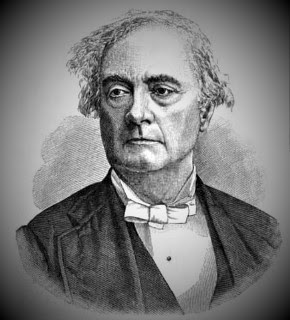
                                                            Francis Wade Hughes, Esq.

                                                 Chapter 23 - Kerrigan Is Paid

Mrs. Fannie Kerrigan, James’ wife, was destitute during the trials. The newspapers bathed their columns in human interest stories on the Mollies. The Herald visited Mrs. Kerrigan, and found her in bitterly reduced straits. She and her children were down to “eating bread and water” and were to be evicted for failure to pay their rent. The poor woman mournfully reported that she was planning to sell her furniture, farm out the children, and “go out to service”. When the reporter asked her if she would “live with Jimmy again”, she said she would “if he promises to be kind to me, but if he is rough with me, I won’t stay with him a day.” But, she added, “I’m not sorry I testified, and I told Jimmy in jail…that I would go on the stand against him again if the court wanted me to.” (Broehl, Page 329).

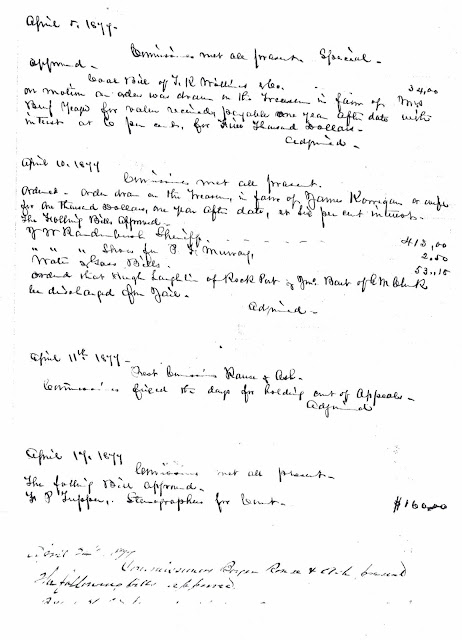
When Benjamin F. Yost, the policeman, was assassinated, the Tamaqua council offered a reward of one thousand dollars for the arrest and conviction of the murderer. The Schuylkill County Commissioners had also offered five hundred dollars additional (Patriot, page 1). At the exact time, that James Kerrigan was released by the Carbon County Court and Jail, at a meeting of the Carbon County Commissioners, the official meeting minutes of April 10, 1877, showed Kerrigan was paid $1,000.00, but there was no indication as to the reason for the payment. This would be the equivalent, according to US Bureau of Labor Statistics, of $24,000.00 based on today’s currency. He was later paid, another $500.00, the equivalent of $12,000.00 in today’s currency.

This is the concurrence needed to prove that James Kerrigan was given leniency for his testimony against those convicted of murder. On September 15, 1877, the Carbon Advocate newspaper reported that, “Jimmy Kerrigan, the notorious Mollie Maguire, was in Pottsville the other day for his witness fees in the several murder trials. Frank Hughes gave him a letter recommending their payment.” (Carbon Advocate, September 15, 1877, page 4). I was unable to ascertain the amount given to Kerrigan from Schuylkill County, however, from Carbon County, he was given, at least, the total of $1,500.00 (the equivalent of $36,000.00 in today’s currency). The total average salary of a miner in 1877, was around $300 to $400 annually.


                                            Minutes from Carbon County Commissioners


Chapter 24 - Kerrigan Moves To Virginia

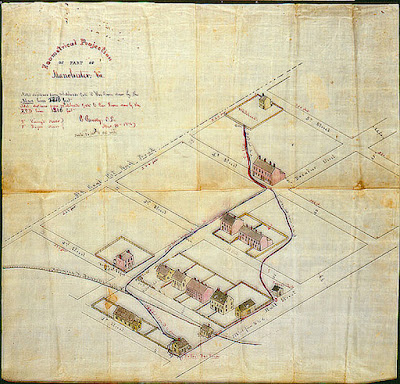
Despite his attempts to get a job via Gowen, Pleasants, and even Kaercher, James Kerrigan found himself, “in a reduced condition at present myself and family, and no prospect of any supper.” (Riffenburgh, page 163). Franklin Gowen, the President of the Reading Railroad Company, had offered a reward of ten thousand dollars (according to US Bureau of Labor Statistics the equivalent of $240,000.00) for information leading to the detection and conviction of the persons who committed crimes against his company, and “so certain is it that the informant would be murdered, that in addition to the reward, he offers protection to his person, and safe transport and expenses to another country” (Somerset Herald, Page 2). He and his family were eventually resettled in Virginia, where he held a position as a fireman with a railroad. (Riffenburgh, page 163). His residence was located at 15 East Third Street, Manchester (later annexed to the City of Richmond), Virginia.

In order to provide anonymity to his family and self, James Kerrigan changed his last name to Higgins, his wife’s maiden name. James Higgins (Kerrigan) would later add to his criminal record in Richmond, Virginia, in at least two separate incidents. The newspapers reported, “J.W. Moody and James Higgins fighting in the street. Fined $5.00 each” (Times, June 21, 1885). “James Higgins was required to give bond to keep the peace and be of good behavior for sixty days” (Times, September 1, 1892). James Higgins (Kerrigan) would later die, peacefully, at home on October 1, 1898 and was buried in Maury Cemetery, without a grave marker. His death would not have been known, except, that his widow applied for a pension. An investigation started, and it was learned that Kerrigan had been living in Virginia. He did all in his power to keep his past life a secret, and his widow followed until want forced her to apply for a pension. Kerrigan was a member of the Union Army during the Civil War (Denver Post, October 18, 1903).

            James Kerrigan's residence at 15 East Third Street, Manchester (Richmond), Virginia


Chapter 25 - The Post Mortem Examination

E. J. Solliday, M.D., Sworn Testimony

Q.  What wounds did you find on him after you had examined him?

A.  I found a gunshot wound in the right side of the right hypochondriac region, between the eighth and ninth ribs.


Q.  Did Yost say anything, on that morning, about seeing the flash of the pistols and the men?

A.  Yes, sir; he saw only one flash; the flash of one pistol.

Q.  What else did he see?

A.  He saw two men running away from him; one man was kind of back of him, and wheeled around and ran away when he saw him, and the other man was just in the act of wheeling around.

Q. Which way did he see them wheel around?

A.  Up toward the cemetery, he said.

Q.  To whom did you give the bullet that you found at the post mortem examination of Mr. Yost?

A.  To John O’Brien, the County Coroner of Tamaqua.


Q.  Describe the wound that you found which had been inflicted on his person?

A.  I found the gunshot wound in the right hypochondriac region, the ball entering between the eighth and ninth ribs; it had passed through the abdominal walls, passed through the right lobe of the liver, and entered the stomach at the pylorus, passed out at the exterior surface of the stomach, and lodged over on the left side, and struck the eighth rib near the spinal column, and there I found the ball under that rib.

Q.  What was the cause of Mr. Yost’s death as developed by this post mortem examination?

A.  The primary cause was the gunshot wound. The immediate cause was hemorrhage.

Q.  Produced by what?

A.  Produced by the rupture of the hepatic splentic and superior mesenteric arteries.

Q.  And the immediate cause of his death was hemorrhage?

A.  Resulting from this wound.

Q.  State whether or not it was a mortal wound?

A.  Necessarily a mortal wound.

Q.  And he had no chance for recovery?

A.  None at all.

                                                    Post Mortem Bullet Trajectory - Front
                                                    Post Mortem Bullet Trajectory - Back

Daniel Schepp, Sworn Testimony

Q.  Did he make any statement to you after that, in reference to how he had been shot, or by whom?

A.  I asked him and he told me, as he was going on the ladder to outen the lamp, two men stepped up to him and shot him; both shot nearly at the same time; they were within two yards of him, about two yards.

Chapter 26 – Recreating the Crime

            On murder mystery television programs today, the public has an expectation, that within the confines of an hour show, the Police Department can recreate the crime scene and solve a murder by the end of the show. It is true, that the latest techniques in forensic sciences have contributed to more successful prosecutions than ever before in modern history. Is it even remotely possible that we can recreate the crime scene of the murder of Benjamin Franklin Yost in the early morning hours of July 6th, 1875? From an amateur sleuth’s point of view, let us give it try.

                In the re-imagined scene depicted below, that was drawn for Allan Pinkerton's story book, certain details can be alluded to and can be counted on as being correct. When Officer Yost left his abode and traveled north on Lehigh Street to the northwest corner of Broad Street in Tamaqua, he placed his ladder facing north against the gas lantern post to gain access to the lamp. He must have ascended the lamp to the third step, because in order to have access to extinguish the lamp, any person that was Officer Yost's five-foot, eleven inches in height would need to be able to be at that height, to have reached the controlling mechanisms, to put out the flame. Any higher, the officer would not be able to see what he was doing. Any lower, the ballistic evidence does not work.

            After reading the postmortem examination record, conducted by Doctor Solliday, we know that Benjamin Franklin Yost was killed by a single bullet, that entered his left side of his abdomen, between the eighth and ninth rib and was found at the eighth rib near the spinal column. We can recreate that trajectory and angle of the path of the fatal bullet. We also know, from the testimony of both Doctor Solliday and Daniel Schepp, that Officer Yost exclaimed, before his death, that the murderer stood six feet away and fired the pistol. The heights of the convicted men, James Boyle and Hugh McGeehan, were both six feet tall. The height of James Kerrigan was nearly five feet tall. Knowing these parameters, let us examine the two depictions below and pick which of the scenarios seems more probable.

            As can be seen from the rudimentary illustrations below, if you align the elbows where it intersects the trajectory of the bullet, the more natural stance of the shooter would be the second scenario of James Kerrigan being the shooter. In the first scenario, the shooter’s elbow would be pointing downward, in a very awkward position. Not definitive, but a very compelling case of James Kerrigan being the more likely murder suspect.


Conclusion

            After two years of investigating the circumstances of the death of Officer Benjamin Franklin Yost, I am certain, that from the preponderance of the evidence submitted, that the convictions of Hugh McGeehan, James Boyle, James Carroll, Thomas Duffy and James Roarity were wrongful. There is more than enough evidence provided, that James Kerrigan, and James Kerrigan alone, murdered Officer Yost. With the assistance of Daniel Schepp and Charles Albright, Kerrigan was offered a deal to save his life from the gallows. He testified against others that he knew were innocent of the crimes that he, alone committed.

            In 2006, the General Assembly of Pennsylvania, by both Senate and House Resolutions (SR 235 and HR 527 respectively), recognized the lack of due process in the 1876-1878 trials of several alleged members of the Molly Maguires and memorializing the Governor to issue an order acknowledging the same. To date, the Governor has not issued such a proclamation.


Epilogue

            On or about June 14, 2019, I had proffered to the Schuylkill County Court of Common Pleas, Clerk of Criminal Court, a request for access to any and all records pertaining to the Molly Maguire trials. Much of the original court files are missing, which should be in the custody of the Clerk of Criminal Court or subsequently filed in Schuylkill County Archives. I wanted to review the original court records that have remained. The only remaining Molly Maguire trial records stored within the Schuylkill County Archives are electronic records, saved in PDF format.

After the submission of a request for access, that would allow to have duplication of the records in the same media as maintained by Schuylkill County and permitted under the Case Records Public Access Policy of the Unified Judicial System of Pennsylvania, I was denied such access and was told such files would need to be changed from electronic format to paper after paying an exorbitant fee, by the Clerk of Criminal Court. I contacted an attorney promptly and brought a suit against the Clerk of Criminal Court by filing a Motion to Compel. On December 31, 2019, Judge Cyrus Palmer Dolbin ordered the motion be granted and that the Schuylkill County Clerk of Criminal Court shall deliver such materials listed in my petition, to be delivered to me.

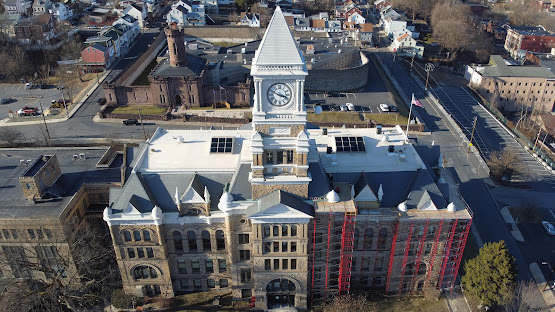
This was the first time in 142 years, that the Schuylkill County Court of Common Pleas delivered justice to my family. I did not want anyone else to tolerate the same outcome as I had come to experience. Impediments to the transparency of government need not to be made acceptable to the citizens the government serves. The Schuylkill County Courthouse, with the prison behind it, is pictured below.