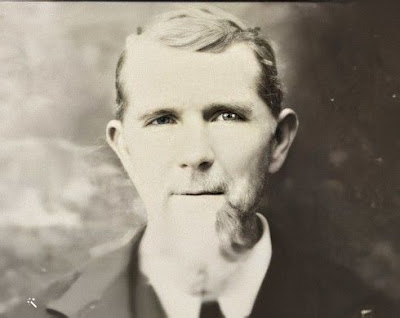
Who killed Police Officer Benjamin Franklin Yost? A Mollie Maguire Story


Chapter 5 - Kerrigan’s Initial Confession

            According to the author, Arthur H. Lewis’ interview with Mrs. Isabelle Wilford, the granddaughter of Daniel Shepp, James McParland had visited her grandfather, at his residence, on or about, late evening, January 27, 1876. “My grandfather, Dan Shepp was used to all kinds of shocks. But he often told mother the biggest shock he ever got was the night he heard somebody banging on the front door and when he went down in his night clothes, lantern in one hand and pistol in the other, found ‘McKenna the Molly’ standing there.”

            “What the hell do you want, McKenna?” my grandfather asked.

            “I want to come in and talk to you,” he answered.

            “At this hour?” and when he nodded his head, my grandfather said, “All right. Put your hands over your head and walk in but don’t try any tricks. I’d just as soon shoot you as any other rat.”

            It took McParland a while to convince Shepp that he actually was a detective and not ‘McKenna the Molly’ (Lewis, page 206-207).

            McParland was given a message by Mrs. Fannie Kerrigan, who had intimated that her husband would talk to Mr. Shepp. Kerrigan wanted to bargain for a confession. As for price, both McParland and Shepp agreed that what Kerrigan would want in payment was his life, whatever that might be worth once it became known he was an informer (Lewis, page 207). Shepp was summoned by Sheriff Breneiser to Carbon County Prison, in the early morning hours of January 28th,, 1876.


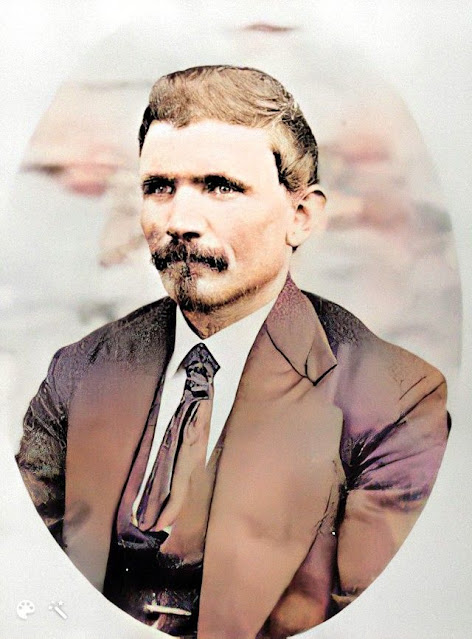
                                                                    James Kerrigan

            Kerrigan, in this first of many subsequent confessions, cleverly avoided direct involvement in any murder. His role, one which he never dropped, was that of an almost innocent bystander, drawn unwittingly into the Brotherhood, afraid for his life and that of his family if he should reveal secrets of the Molly Maguires or any of their crimes, or resign from the Order (Lewis, page 209). Shepp had promised Kerrigan nothing except his pledge to impress the district attorney with Kerrigan’s “sincerity” and perhaps “a return of the favor”. Shepp then called Sheriff Breneiser, who summoned the district attorney and Mr. Hughes, and handed them Kerrigan’s signed confession, a portion of which follows:

            I, James Carrigan voluntarily makes the following statement and says he will reveal all he knows in regard to the murder of B.F. Yost and John P. Jones and says Hugh McGeehan of Summit Hill and James Boyle works at No. 5 are the men that murdered B.F. Yost on the night of the 5th of July, 1875. James Boyle is a man not much taller than I am, wears a dark mustache. Hugh McGeehan keeps a saloon on Summit Hill. I did not see the shooting but those men told me themselves. Thomas Duffy was to pay Boyle and McGeehan for shooting B.F. Yost. James Carroll gave the pistol to shoot Yost with. Thomas Duffy stayed all night at James Carroll’s house. You mind the time B.F. Yost prosecuted Duffy, I told him I did. Well, John Slatty came to you to settle it, I told him, yes (Lewis, page 210).

            Once the Carbon County District Attorney Edward R. Siewers had Kerrigan’s initial confession, he instructed the Sheriff to keep Kerrigan in the warden’s quarters under twenty-four hour protection, instead of the general population of the jail. Kerrigan had stayed a guest in the warden’s quarters until he was released from jail.


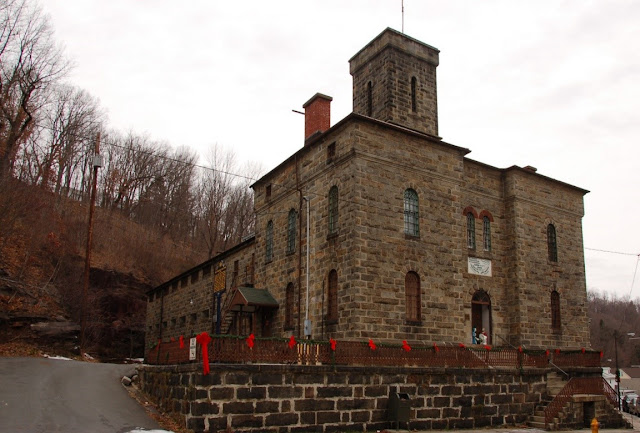
                                                            Carbon County Prison

In the prosecution’s closing argument at the trial, Francis Hughes, Esq., submits to the court and addresses the inconsistencies of Kerrigan’s habeas corpus hearing to the criminal trial testimony, rather convolutedly. “My friend, Mr. Bartholomew says that when Kerrigan gave his testimony on the habeas corpus hearing, that he skipped over that part of the history of his connection with the murder of Yost that relate to what occurred between the time when he left Carroll’s house that night, and when he met the prisoners some time after this, when they narrated to him the history of the murder. That is true, he did. Kerrigan simply said that he left there that night, and the first he heard of the murder was some two or three weeks afterward, when he got the history of it from these prisoners.” (West, page 67).

Therefore, within one week of Kerrigan’s original habeas corpus hearing and the arrest of the defendants of the murder of Benjamin Yost, the sworn testimony of Kerrigan changes from being absent from the scene of the murder and hearing a confession from two of the defendants, two weeks later; to being present at the scene of the murder and assisting in the getaway of the murderers.


Chapter 6 - Kerrigan’s Testimony

            Kerrigan’s manner betrayed a great deal of nervousness, whether the result of his long sojourn in jail or arising from the position he found himself in. He was evidently anxious to screen himself and at the same time seemed to wish to damage the case of the prisoners. His testimony was very important in its corroboration of McParland, and undoubtedly did damage the case of the defense. Kerrigan interlaced his testimony at times rather copiously with profanity, and was rebuked by Judge Pershing. His queer language caused a good deal of laughter. He was escorted to and from jail by a large force of police, as a measure of precaution. He said, in substance:

            “I live in Tamaqua; have lived there between six and seven years, as near as I can think; I knew the defendants here, Hugh McGeehan, Thomas Duffy, James Boyle, James Roarity, and James Carroll; I knew Benjamin F. Yost between nine and ten months, I think; sometime in the Fall or Winter of 1874 (the Winter before Yost was killed) I was present when a difficulty occurred between him and Thomas Duffy. The first time I met Thomas Duffy at the corner between the United States Hotel and the Columbia House, and Thomas Duffy called Yost a Dutch son of a bitch. I was with him, and Yost said to me to take him away. Then Duffy and I started off, and I did the best I could to take him away, but Duffy ran around the Columbia House and came back again, and Yost said if I did not take him away he would hurt him, so we got him away that night. Another night I was taking Tom Pursell home, and he was tight. We got him home, and we were coming down the street, and Duffy was with me, and then a fellow by the name of Flynn was coming up from Frackville that way and he halloaed that he was “an Irish navigator,” and Duffy ran after him, and Barney McCarron and Yost was there. Then we all had some words, and so McCarron held me while Flynn was putting the knife to me. Then he searched me to see if I had any weapons, but did not get none. Then McCarron took Duffy to the lockup and then took me to Doctor Goulden that I might get sewed up. I did not know the next morning that Duffy was beat, or anything. I found that out by James Carroll, who came to my house.”
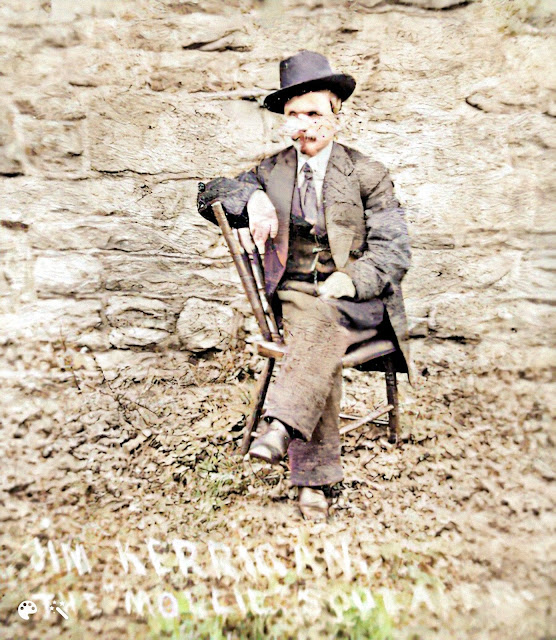

                            James Kerrigan after his release from Carbon County Prison

            “The next place I saw Duffy was in Squire Lebo’s office. He said: “Never mind; for what we have suffered we will make Yost’s head softer than his ass.” He showed me his forehead, where Yost had hit him; he had a large plaster on his head where he was beat. He said that Yost had done it. At another time he told me, down in Tom Carroll’s, that he had a notion to go and shoot Yost himself, him and Mickey Campbell, at the Run, and Jim Carroll said he had better leave it alone as he was well known, and as Mickey did not belong to the organization, it might not be safe to do it, and he said: “Never mind; we will pay a couple of strangers to do it.” Thomas Duffy told me that in Jim Carroll’s house in the presence of Carroll. This was somewhere about the first of June, 1875. I think about the middle of June, I came down on the street, and, as I was going down by the Columbia House, on Broad Street, in Tamaqua, I was going over past James Carroll’s, and Thomas Duffy and James Roarity was standing on James Carroll’s stoop, talking, - I mean Thomas Duffy and James Roarity, these prisoners. I came up and the words I says was: “Well, blackguards, how are yez making it?” That was just the words I said to them, and they said, “Good.” So I went on, and I said: “What are yez stopping at now?” and Duffy then told Roarity he would give him ten dollars to put Yost out of the road. “I will,” said Roarity, “and you can bet on that, and if I do not do it myself, I will get two men that will do it.” Then we went in there, and Duffy made the remark that he was working a night shift, and he would send good men who would come and do the work, and, he was going out, Duffy says: “Now you attend to that, and if I don’t do it myself, I will get somebody that will do it.”

            Well, on the 5th of July last, I was in Tamaqua. The band was playing upon the hill up where I lived, between 4 and 5 o’clock in the morning, and the cannon was firing off, and I got up between4 and 5 o’clock and went down to where the band was playing, and my two little boys was with me and I sat there, and when the band was done playing, I went down town and sent the two little boys home. I went down town before breakfast, and the two little fellows asked me if I would not bring them up some shooting crackers and I said that when I went down town, I would do it. So I went down town and staid around awhile, and went about the street, and the first drink that I had that day was with George Boyle and Barney McCarron; and I had it in the Columbia House. Me and Boyle was standing by the Columbia House and Barney McCarron came along and we had a drink. So from there I went over to James Carroll’s, and me and James Carroll had another drink. I treated, and he treated, and from there I went up home. I met a man named William Cresson. He was tight, and I went home and had breakfast, and sat outside on the porch, with the two little fellows, showing them how to fire off the shooting crackers. Then I laid down awhile on the floor. I got up then, and I took a walk by the cemetery over to the picnic. That was up toward Newkirk. I had a bit of a cane in my hand; I didn’t go into the picnic ground, but I staid under the shade of the trees, and after that I came away down again, and I met Roarity between the Columbia House and the United States Hotel, and he says to me: “Where have you been all the morning?” and I says, “I went down town early this morning, and went home and laid down, and so,” says I, “let’s go down to Carroll’s, and we will have a drink.” “All right,” says he, and we went down to Carroll’s and had a drink there. I think that night between eleven and twelve o’clock, or one, I would not be positive about the time, but it was somewhere about that neighborhood.

            So we had a drink. I treated, and he treated, and Jim Carroll treated, and Roarity says to me: “Come over to Storm Hill.” “Oh no,” says I, “it’s too hot, and I have got no money to spend to go over.” “Come to Campbell’s,” he says; “No, I won’t” says I. And says he, “If you will come over to Storm Hill,” says he, “I will be over tonight with you again.” Says I, “No, I have no money to spend.” And then Carroll says, “Go on with him, and there is two dollars for you to spend.” And he gave me the money. So I went on with Roarity, and we went to Alexander Campbell’s, and when we got to Alexander Campbell’s there was some other man in the bar-room; I can’t tell who it was. Roarity says, “Campbell, did you see Hugh McGeehan and Mulhall here today?” “No,” says Campbell, “very likely they’re in Chunk, or on the Hill.” Says Roarity: “I am going up to see them.” Roarity started off and left me in Campbell’s and before he got back there was word come to Aleck Campbell to tell Roarity that his wife was sick. He was not there when the word was left. He came back and went home when he heard it. That might be about 5 o’clock, or something like that – in the neighborhood of it.

            On the road going to Storm Hill, Roarity told me that he had Tom Mulhall and Hugh McGeehan to go and shoot Yost that night, and he was going to go along and show them the road.

            When he got to Campbell’s he inquired from Campbell whether Tom Mulhall and Hugh McGeehan had been there, and Campbell said they were not. After Campbell told him that the men were not there he went to find them. When he came back he said to Campbell that he had seen them on the Hill. Campbell gave him the word then, and he went home, and I did not see him after that.

            I think it was about half past five or so when I left Campbell’s, and I reached home about fifteen or twenty minutes after seven o’clock. Between 9 and 10 o’clock, I went down to Jim Carroll’s; Davy Davis and Owen James and some other men were in the bar-room. I could not recognize who they were, but they were sitting on the chairs, Davy Davis was drunk and Owen James was very drunk. They had their glasses set on the bar, and they were drinking, and some other men were sitting on the chairs, but I could not recognize who they were. The bar-room in Carroll’s and the kitchen is on the one floor, and both doors face one another; when there was nobody in the bar-room I used to go into the kitchen, and I walked into the kitchen this night and the door was half closed. Hugh McGeehan sat in the rocking chair in the kitchen and Thomas Duffy stood beside him and James Carroll and James Boyle were there, and I went in; I said: “How are you making out,” and they answered me: “All right;” and James Carroll got up and walked out. Then we all got up and walked out on the stoop, and they sat down; and Davy Davis was there when I passed out. We went on the stoop, and Jim Carroll came up to the stoop from the direction of Herron’s saloon and said he: “I can’t get none.” He said it to James Boyle and Hugh McGeehan and Thomas Duffy, and I was present there. He sat down on the stoop, put his hand into his vest pocket, took a quarter and says to me, “Jimmy, go over to Patrick Nolan’s and say that you want the loan of his pistol for a man that has to go over to Mauch Chunk. I went over to Nolan’s, and there was no one in Nolan’s but a man named Patrick Coleman, and Nolan and his wife. I called Nolan to one side, and asked him if he could loan me his revolver to give to a man who was going to Mauch Chunk or Summit Hill, and he said that he had none, for he had loaned his away. I came out from where I had called him aside and spent the quarter. I took beer and Coleman took something out of a bottle, whether whiskey or not, I do not know, and Nolan took a drink with me.

            I came back to them again at Carroll’s, and told them I could not get any from Nolan; that he had none.

            I says to them: “What are you going to do?” Duffy made some remark about they were going to get Yost “put out of the road.” I said to them: “You had better leave that alone. Now drop it. I might be blamed for that, for Barney McCarron and me had a fuss sometime before, and I think you had better drop that, or I will get blamed for it.” With that Hugh McGeehan and Boyle got up, and whether it was Boyle or Hugh McGeehan who said it, I could not say, but one of them said: “By their God, they come three times to Tamaqua to do the job and they were disappointed and by their God, they would not go home that night until they did do it.” Them was the words.

            So, then, James Carroll, when he said these words, was making for the bar-room door, and then all got up and they went in. McGeehan says: “I am all right, I have got a five shooter; I have got Roarity’s pistol.” I saw it in his hand; I knowed the pistol. Then we all went into the bar-room, and James Carroll went behind his bar, and he pulled out a drawer that he had there for putting his scraps in, or whatever it is, and pulled out a single barreled pistol, a breech loader; and he made the remark that he only had one ball. I seen him put the ball into the pistol, and he loaded it and gave it to Boyle, and Boyle put it in his pocket; and he made the remark to Boyle; “It is a poor thing to do a job like that with; if I had a good blackjack I would give it to you along with it. Then they allowed that Roarity could not come along, that he had to stay home because his wife was sick, and that Campbell told them that Carroll should get somebody to show them the road. McGeehan said that they wanted to know the old Mauch Chunk road, for they wanted to go that way after they would do it. So Carroll said he did not know who would show them the road except me, for he said that Duffy would have to stay there all night, so that he and his wife could swear that Duffy knew nothing about it. Says I: “If I go with them to show them the road I will be blamed for it.” Says Carroll: “It will be late, and nobody will know.” I said I did not care. I would show them the road after they would shoot him. Duffy took them up the railroad up by the depot, up by the back way to the head of town, and left them at the cemetery. I told them I would meet them at the cemetery, and after that I went up to the Columbia House, and left them there. I stood at the Columbia House and looked into the windows, and there was nobody in the bar-room, and, after that, I went up to the Broadway House, kept by Michaels. There I went in, and Barney McCarron was in there, and a large crowd. I had a drink with McCarron. He was treating, and, after we drank, Frank Yost came in from the back room; I was treating and I said: “Frank, take something?” He took a cigar on my treat, and I believe Barney McCarron took another.

            From there I turned down to the corner of Gas Jake’s, and from there I went down by Allen’s shop, and from there I went till my own house; and my woman asked me what time it was. It was going to 1 o’clock exactly. From there I got a bottle of whisky that was in my home, and went back across the hill and over to the cemetery and met Boyle and McGeehan. They were standing at the cemetery, where I told them I would meet them. We sat there a while talking and waiting for them to come and put the lights out, and while we were waiting for them to come and put the lights out, we seen them coming and they put the lights out down the road first.

            I could see Yost and Barney McCarron, and when we seen them coming up at that distance we walked down a piece toward the lamp with McGeehan and Boyle, and I stood in there between sixty and seventy yards, as near as I can think, where Roland Jones used to keep a store.

            McGeehan and Boyle went down to the lamp post. Barney McCarron stood across the railroad a piece, and Yost crossed over to Lehigh Street to put the light out there first, and came back. They went away some place else, I could not say where, and did not put out this light for some time; and McGeehan and Boyle stood in the shade of the trees waiting for them. They were there waiting some time, I could not say how long, and then Yost and McCarron came out, and McCarron stood at the corner of Squire Lebo’s house, across the railroad, and Yost went over to put the light out, and got up on the ladder, and McGeehan had to reach up and I seen him shoot him. He put his hand up and I seen the flash of the pistol, and they were just like you were doing, like this (clapping his hands twice, one after the other) that Boyle and McGeehan both shot at him.

            They might be within two yards of him when they fired. I might be within sixty or seventy yards on the upper side of the street, looking right across. Yost did not put out the light at all; the light burned. After they fired, Barney McCarron fired two shots, to the best of my knowledge, across the railroad after them. Then they ran to where I was and McGeehan fired another shot. He thought Barney McCarron was after him. McGeehan said “The buggar was done now,” and fired one shot. There was nobody else to fire, Boyle only had a one barrel pistol, and he had fired it, and I had no pistol.

            We ran up the road going to Newkirk. We ran across the railroad, and up by the spring where I was arrested. Down by Orwigsburg Street, down by the shaft, and I was running, and as the morning was quite dark, I fell down the big ash bank at the shaft, and tore the whole knee out of my pants. I have the pants down in the Mauch Chunk prison, and you can see them now. I went on then, and left them by the bridge, crossing the railroad by the shaft, and told them to go on down, and I left them down by Manus Boyle’s, and I told them to go on until they met a finger board and the first road they met beyond that they should turn off to the left hand, going towards Centreville. That would take them out to the White Bear.

            I came home, and got up to the door and got up on the porch, and pulled off my boots so that nobody would hear me, and I hid my pants under the banisters, under some clothes so that my wife would not see them. The door was not locked; I did not lock the door from the time I had been there before. My wife had went to bed” (Miner’s Journal).

            Here is verbatim testimony from the trial: Q. Did you ever have any conversation with Boyle as to what he had done the next day after the shooting? A. I had about the 14th or 15th of July. I had a conversation with him, Alex Campbell and James Roarity in Storm Hill one Sunday (the 14th and 15th of July in 1875, do not fall on a Sunday). Q. What did he say? A. Boyle stated that he was sick that day, but he started in the morning to go to work, and he had to quit work and he came home, and when he got home, his wife (Boyle was never married) had a bottle of grog for him. He said he did not work that day, but he went to work in the morning to make everything sure. (West, page 74).

            There are two, main inconsistencies, that anyone can see, between the statement used for the prima facie case, wherein, Kerrigan testifies that he was not present at the scene of the crime, but had learned of its development from the defendants. Yet, during the trial, Kerrigan has a long dissertation of his involvement and presence at the scene of the homicide. Secondarily, Kerrigan maintains that Boyle was married, when in fact, he was not.

Chapter 7 - McParland’s Testimony – Never Met Boyle

            On the stand he was cool, deliberate, careful, positive and powerful. He swore that he was sent to this county, in 1873, by Major Allan Pinkerton, of Chicago, to discover the membership and secrets of the Molly Maguire organization. He swore that he knew James Carroll, Thomas Duffy, James Roarity and Hugh McGeehan. Boyle he could not be positive about. On the 14th of July, McParland received instructions from his chief, at Philadelphia, Benjamin Franklin, to go to Tamaqua and obtain information regarding the murder of Yost. He went to Tamaqua, Summit Hill and that vicinity, and, by reason of his connection with the Mollies and the confidence reposed in him, finally obtained the following confession from Hugh McGeehan, which is given in the detective’s own language:


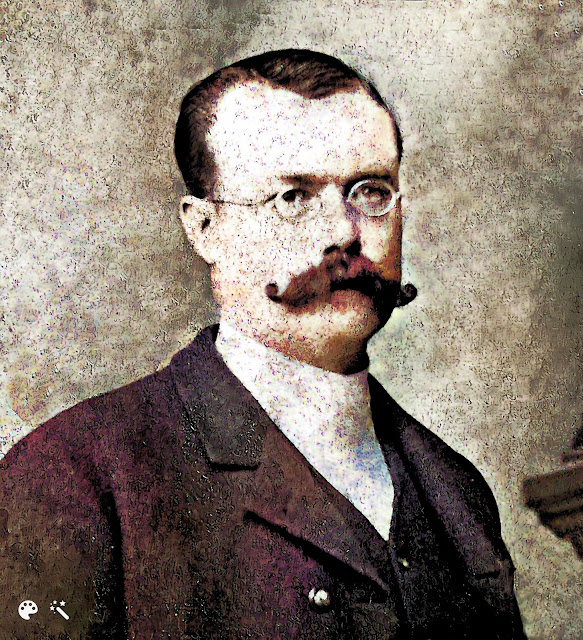
                                                                James McParland

McGeehan’s Confession

            “On the 14th of August, 1875, I was at Storm Hill and went to Summit Hill. I went there to an opening. Hugh McGeehan was opening a saloon upon that evening, Saturday I think; I got there in the afternoon, and in the course of our conversation I asked McGeehan if he could not furnish me with a few number 32 cartridges. I stated I had got a revolver that carried a number 32 cartridge, and I wanted a few cartridges. I showed him the revolver. He took me aside to an ante room that was in his barroom where he kept in a basement at Summit Hill, beside the post office, and said, “I have no cartridges, Mac, that will fit that pistol. James Roarity has, and I guess you can get a few from him;” he says “Roarity is kind of cautious about purchasing any cartridges to fit his pistol, on account of it being the weapon I used to shoot Officer Yost, at Tamaqua.” I asked him how that thing was; I heard about it. Well, he stated that on the evening of the 5th of July, James Roarity and James Kerrigan came to him and asked him to go over to Tamaqua to shoot Yost, and that Roarity was to go along with them.”

            “Roarity stated that he would go; Roarity and Kerrigan then left, and as he supposed to go to Tamaqua. They were not to go together, and they were to meet at James Carroll’s, in Tamaqua. He stated that he went and had supper, and he met James Boyle, and he asked him to come along with him, and Boyle agreed, and they proceeded to Tamaqua, but on their way they called in at Campbell’s saloon, at Storm Hill, and Campbell stated that there had been a party there that had left a message for Roarity that his wife was sick, and consequently Roarity could not go, but that Roarity had sent his revolver to Tamaqua by James Kerrigan, and that they could get it at Carroll’s. He stated that he, McGeehan, and Boyle then proceeded to Tamaqua, and when they got there they got Roarity’s revolver, or at least the revolver purported to be Roarity’s, that had been sent by Kerrigan, and this one-shooter that James Carroll gave him. James Kerrigan was present, he stated, at the time, at Carroll’s; he did not say whether James Duffy was present or not; Carroll, after giving him the revolver, objected to them going to commit the murder and stated that trouble would arise from it.”

            “He, McGeehan, stated that it was the second or third time he came for a job of this kind, and he was not going away without doing his work, and that it was now or never. He stated tha he was not very well acquainted in Tamaqua, but Kerrigan took him and Boyle and placed them in a certain position on a street, under the shade of a tree, and told them to wait until Yost came to put out the lights – the lamps, at least, as he generally put the lamps out on this side of the city. Kerrigan, in the absence of having a revolver, as he stated, wanted to have a hand in the play, and stated that he would take two rocks after Yost fell, and he would knock his brains out. He, McGeehan, objected to this process upon the part of Kerrigan, and stated that if Kerrigan was there when the murder would be committed, that if either he or Boyle moved an inch, he, McGeehan, would shoot them both – that he had a revolver carrying five cartridges. The result was that Kerrigan placed them in this position and went down town. He stated that when Yost went up on the ladder to put out the lamp – I believe he stated a ladder – I know he did – that he stepped out from under the shade of this tree, the place they had been placed in by James Kerrigan, and Yost turned around and he shot him. He stated they then went, as it were, along the turnpike around by the Odd Fellows’ Cemetery, of Tamaqua; that officer McCarron kind of gave chase and fired one or two shots at them on their retreat; and that he returned the fire, but did not say how often he shot back. Kerrigan took them to a certain point on this turnpike, and then left the turnpike and crossed a creek or river that flows around there – a branch of the Schuylkill, I think – and took them on the mountain, and along the mountain toward Summit Hill, and fetched them out at a place that is called the White Bear Tavern. That is his statement – I am not very well acquainted with the place – and left them there, and they returned to their respective homes, as he stated, without being seen by a man.”

Other McParland Testimony

            “During the time I was connected with the Molly Maguires there were six murders committed by the organization and five or six attempted. Of the prisoners now on trial Carroll, Duffy, Roarity and McGeehan are Mollies to my knowledge. I do not know Boyle. I have talked with the others, and they knew that I was a member of the order and conversed freely with me on that account. Carroll told me that there was a boss named John P. Jones, at Lansford; that McGeehan and Boyle and several others who are not prisoners here came from Carbon County; that is McGeehan and Boyle came to Tamaqua and assassinated Yost, and in return they were to be furnished by men from that district, or from some other portion of Schuylkill County, to assassinate John P. Jones, of Lansford. This conversation took place on the evening of the 4th of August, 1875 (nearly a month before Jones was killed). Upon the first Sunday in September, 1875 I believe that was the 5th of September – I met Roarity and Carroll, and we discoursed then upon the murder of Jones. Roarity complained that he was very sorry that he had lost his pistol. He said that he had given his pistol to the parties that shot John P. Jones, at Lansford, and that in trying to make their escape they had lost those pistols or thrown them away, and he then understood that they were in the hands of the authorities, or at least this pistol.”

            “I had a conversation with Carroll about the killing of Yost. He said that Yost, in trying to make the arrest of Duffy, one of the prisoners, had abused and almost murdered him, and had also abused their division master at the time – the division master of the Ancient Order of Hibernians, or Molly Maguires, at Tamaqua. That was Jimmy Kerrigan, and I believe the substance of the statement was that he held him while somebody else cut him with a knife. I do not know who the other man was; I believe he was a tailor.”

            What is important about McParland's testimony, is that, the prosecution wanted to corroborate McParland's testimony with Kerrigan's testimony. McParland was very careful in detailing every story of each defendant to match the story that Kerrigan had told on the stand. He studied every defendant, except one. James Boyle. He had never met him. Neither did Robert Linden. They only knew that the Boyles' were heavily involved with the AOH and the miner labor movement.


Chapter 8 - Carroll Never Met Boyle or McGeehan

Before James Carroll was executed in 1877, he left behind a letter to be published in local newspapers. In it he thanked the warden, George Beyerle for his kindness, the deputy wardens, Moses Innis and Michael Schoenman; Father McDermott; the Sisters of St. Joseph and the defense attorneys. Finally, he thanked his father, mother, sisters, brothers and loving wife. His letter continued: “Now gentlemen, I do here confess to be innocent of the crime that I am charged with. I never wished for the murder of Mr. Yost or any other person. I never heard anyone say that he would shoot Yost the first chance he got. I never knew Boyle or McGeehan at the time” (Barrett, page 348).

                                                James Carroll's grave 


Chapter 9 - Who Blacklisted Hugh McGeehan?

            During the trial, Pinkerton Detective James McParland testifies to the following, “McGeehan also told me about his coming over to Tamaqua to kill Yost. He said that John P. Jones had refused to give him, McGeehan, work under the Lehigh and Wilkes-Barre Coal Company, the company that owns the mine he worked in previous to the suspension of 1875. He stated that his object for having Jones murdered, at that time, or at least, for the commission of the murder of Yost, was to procure men to murder Jones, and his object for having Jones murdered was from the fact that he refused to give him work, and a man named William Mulhall; and he stated that there were some others, but he did not mention their names. He said that he and Mulhall had then left Carbon County and went to Luzerne.”

“He also stated that after obtaining work in Luzerne County, at some place adjacent to Hazleton, I believe it is Black Creek or Harleigh, they were there informed, after working about half a day, by the boss or superintendent of the colliery, that they could work there no longer. They then went to Wilkes-Barre and saw Mr. Charles Parrish, who, I understood, was President of the company, to give them a grant of the work, and that he considered the General Superintendent, Mr. Zehner, was willing he should work, as being present at the time that Mr. Parrish gave them a grant of the work, and that when they went to get their work they were positively refused, and he considered through no other influence than the influence of John P. Jones.”


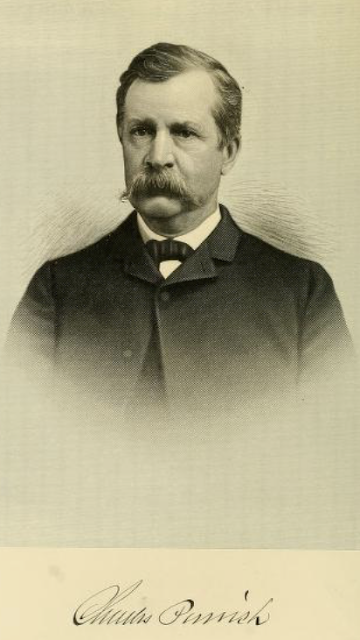
                                                                    Charles Parrish

            James Kerrigan testified that William Zehner, the chief superintendent of the mine, was the one who had ordered the blacklisting of McGeehan, not John P. Jones. This eliminated the McGeehan and the Campbell motivation for killing Jones (Campbell, page 98).

Hugh McGeehan later made a statement, while awaiting execution, to a reporter from the Philadelphia Inquirer, that he was never employed, paid or discharged by Jones. As to the story about his enmity against John P. Jones, he says there is nothing in it, as he was never employed, paid or discharged by Jones, and had no feeling whatever in regard to him, and the story about the murder of Jones being a trade for that of Yost, so far as he was concerned, was totally unfounded in every respect. He says he never knew Yost or heard of him until after the murder, and he denounced Jimmy Kerrigan and McParland most bitterly for testifying to what he calls a pack of infernal lies.


Chapter 10 - Eyewitnesses

            Besides the victim, Benjamin Yost, according to the prosecuting attorneys, there was just one other eyewitness to the crime. James Kerrigan, the prosecutor’s witness, identified Yost’s partner, Barney McCarron as being across the street from Yost, when Boyle and McGeehan fired the fateful shots. Barney McCarron took the stand and testified at the murder trials. He testified that on the early morning hours of July 6th, 1875, near the end of the patrol within the borough of Tamaqua, Yost and McCarron stopped for lunch at Yost’s residence. After completing lunch, both officers left the residence and continued extinguishing the gas lamps throughout the borough, as was the accustomed tasking. Walking north on Lehigh Street towards Broad Street, Yost procured a small ladder to ascend the light pole on the Northwest corner of the intersection.

McCarron stated that he had turned right onto Broad Street. When the shots rang out, McCarron saw two men, “one large and the other, not so large” run westward toward the cemetery. McCarron fired two shots toward the two fleeing men, without results. Returning fire from the direction of the two men missed their target. Mrs. Henrietta Yost ran to help her husband back to their residence, while McCarron testified that he ran to Dr. Edwin S. Solliday’s residence at 134 West Broad Street to get medical attention for Officer Yost.

The defense attorneys maintain that there was an additional eyewitness to the murder of Officer Yost. Defense Attorney, Mr. John Ryon, Esq., had stated that the defense would prove that James Kerrigan shot Yost. The defense attempted to keep that promise by calling James Duffy as a witness. James Duffy stated that as he walking north on Lehigh Street, he saw McCarron and Yost come out of the gate of Yost’s yard. Duffy then stated that he was immediately behind McCarron and Yost, and walked after them as the two men proceeded northbound toward the railroad. He states that James Kerrigan was present. Kerrigan had turned to the northeast corner of Lebo’s house and stood on that corner. Thereinafter, Duffy turned to the left, and walked west on Broad Street toward Odd Fellows Cemetery. Officer Yost crossed the street and started to put out the light. Duffy testified that McCarron was standing in the middle of the road and that Yost was shot immediately after he saw all this (West, page 30).

To stiffen any attempt for witnesses for the defense, James Duffy, approximately 52 years of age, was arrested for perjury and sentenced to three years in prison. He was not the last to be charged by the prosecution for giving testimony on behalf of the defense. This does not negate the testimony given by Duffy. If both Kerrigan and Duffy traveled westward toward the cemetery, this may account for McCarron seeing two individuals fleeing the scene of the murder.


Chapter 11 - Fannie Kerrigan’s Testimony

            During the first Yost murder trial conducted in the county seat of Pottsville, Schuylkill County in May, 1876, the list of prosecution witnesses included the wife of James Kerrigan. Fannie Higgins was the third daughter of George and Margaret Higgins of Tamaqua, born in January of 1847. Fannie’s other siblings were William, George, John, Catherine, Joseph, Margaret, Daniel Rosanna and Mary. Fannie’s youngest sister, Mary was born circa 1753. Fannie Higgins had married James Kerrigan around 1866, after James returned to Tamaqua from the Civil War. By 1870, James and Fannie had three boys, Michael, George and James. The marriage was tumultuous throughout the marriage, due to domestic violence and alcohol abuse on behalf of James Kerrigan. Fannie’s father, a Colonel with the 16th Pennsylvania Volunteers during the Civil War, disliked his son-in-law and had told McParland, he had never visited his daughter’s residence as a guest.

A little sensation was created by Mrs. Kerrigan’s testimony, when she refused to go and see her husband in prison because he had done such a crime as the killing of Yost, and turned informer against the poor innocent prisoners to suffer for his crimes. (Harrisburg Patriot). Mrs. Kerrigan’s testimony was perhaps the most startling and important introduced by any single individual during the trials. Drab and miserable, in terror of her husband, and yet somehow fierce and even noble, she stood on the witness stand, to charge her husband with “the crime of Yost” and to declare that he was trying to send innocent men to the gallows to save his own hide.

Mrs. Kerrigan said her husband had shot Yost. “He left the house with a pistol at dusk on July fifth and returned before dawn the next morning and told me he had shot Yost.” She visited with him in jail until she heard he “confessed”. She never went again. On the witness stand she said: “I didn’t send him his clothes because he wants innocent men to suffer for his crimes. Why should I go see a man guilty of such a crime as that of Yost’s murder? Yes, I lived with him after the crime. If I had disclosed him, he would have shot me. He threatened me and said he would blow out my brains. I treated him as a wife until he turned informer.” (Barrett, page 134).

What is printed below is taken verbatim from the court records:

Q – Was your husband the owner of a pistol?

A – Yes sir.

Q – About how long had he owned the pistol?

A – I think about one year.

Q – What did your husband do after he came? After you let him in?

A – After I let him in?

Q – Yes.

A – Why, he had his boots in his hand when I let him in, and he said he shot Yost (Bimba, page 95).

Gowen took Mrs. Kerrigan under cross-examination, and the following testimony took place:

Q – You have never been to see your husband since that time, have you?

A – No sir.

Q – Have you refused to send him clothes?

A – Yes sir.

Q – And do anything for him?

A – Yes sir.

Q – Did you not come down to Pottsville, voluntarily, and of your own will, some time ago to make a statement or affidavit that your husband had killed Yost; did you not do that of your own motive?

A – I made my statement before I came to Pottsville.

Q – You made it before Squire O’Brien?

A – Yes.

Q – You went there voluntarily?

A – Of my own accord.

Q – To get your husband hung?

A – To tell the truth.

Q – To have the father of your children hung?

A – Not when I was telling the truth.

Q – Why did you not send him his clothes when he was lying in prison?

A – Why, because he picked innocent men to suffer for his crime.

Q – Because he picked up innocent men to suffer for his crime?

A – Yes sir.

Q – Why did you refuse to go and see him when he had sent word that he wanted to see you?

A – Because any man that does such a crime that he done, why should I turn around then, and –

Q – And what; go on.

A – That’s all.

Q – What crime had he done?

A – What crime did he do?

Q – Yes

A – The crime of Yost.

Q – The murder of Yost?

A – Yes sir (Bimba, page 96).


Chapter 12 - Alibi Witnesses – Family Members

Since the defendants were unable to testify on their own behalf, alibi witnesses and eyewitnesses were only used for the defense. Several witnesses have been examined on the subject of the alibi in relation to James Boyle. One of the first alibi witnesses to take the stand, was a cousin of James Boyle. Kate Boyle was born in July of 1859 to John W. and Mary Boyle in County Donegal, Ireland. She had emigrated, with her parents and siblings, to America on April 5, 1864. Kate was called to the stand and said that on the 5th of July, 1875, she lived at No. 5 with her parents. She said that morning between 9 and 11 o’clock, she was working at a hog pen and she saw John Boyle there. The material portion of her evidence is that she saw the prisoner, James Boyle, that evening at her Uncle Barney P. Boyle’s house in Ashton. She stated that she was going for water and stopped in Barney P. Boyle’s tavern. Her uncle, aunt and James Boyle were there, and it was then dark. She stated that she was about sixteen years old and at 1 o’clock in the evening was coming home. She remembered the time because she saw the clock at the post office. She said she walked about three quarters of a mile from their home with John Mulhearn and her sister Bridget; and that John Mulhearn left shortly after.

James Boyle’s uncle was next called to give testimony on his behalf. Barney N. Boyle had married Hannah Boyle about 1865. Barney N. Boyle stated that he saw James Boyle on the night of the 5th of July at Barney P. Boyle’s house and tavern. He testified that John Mulhearn came in afterward, and remained a couple of minutes. The witness says that he remained in the house in company with the prisoner and Barney P. Boyle’s wife. Barney N. Boyle left his brother-in-law’s tavern and went to work at half past 10 o’clock as he was on the 11 o’clock shift. He also said that James Boyle was drunk and that the witness went with him to his own house and his wife opened the door. The witness went in and pulled off the prisoner’s boots and put him to bed, and then left. On cross-examination, he said that he came to this country in 1873. He stated that Kate Boyle was not present in Barney P. Boyle’s house while he was there. He says that Barney P. Boyle is now hunting work, and that he saw him last on the 4th of July of this year, at home. He cannot give the date of any other time he was at Barney P. Boyle’s house, but he met James Boyle frequently before and since. He took James Boyle home drunk pretty often, and has taken him home drunk since that date.

Hannah Boyle was born in August, 1846 in County Donegal, Ireland. She was the wife of Barney N. Boyle, and had testified, as to her husband going to work on the night shift, before Barney N. Boyle and James Boyle left their house on the night of the 5th of July, 1875. She says that the two went together. She said, “When I heard James was arrested, I said that it couldn’t be for he was at our house.” She called Barney McCarron “a dirty deserter.” (Barrett, page 210).

            Another family member was called to the stand, that of Kate Boyle, not to be confused with the younger Kate Boyle. This elder Kate ran a boarding house to make ends meet. In 1875, Hugh McGeehan had resided in the boarding house, which was situate in Storm Hill. During the second trial, Kate states that the last time she was Hugh McGeehan on the 5th of July was about 6 o’clock, in the evening. She next saw him the next morning between 5 and 6 o’clock, when she unlocked the door to let him in. McGeehan then told her that he had been at a ball in Summit Hill, and had left there at 10 o’clock to go to Nesquehoning. Kate had testified that it was her habit to go to bed at 10 o’clock and that John Burns, to which she is now married, and Patrick Breslin, another boarder, went to bed before she did. Con (Cornelius) Shovlin, a third boarder, was still out, and she left the back door open for him. She also said that there was but one key to the two doors, and that she locked the front door with the key and placed it in the back door which was left open in order that Shovlin could get in. She stated that in the morning when she got up, she found the door locked and McGeehan outside. Shovlin told her he had locked the door. Burns and McGeehan usually slept in the same room. Kate stated that after McGeehan came from Mauch Chunk, he went to Summit Hill, came back about six o’clock and that after supper she saw him go on through the woods, in the neighborhood of Summit Hill, and that was the last she saw of him until the next morning. Kate admitted on her cross-examination that she had made statements contradictory in what she had stated on the stand in the first trial, and admitted that she had said that McGeehan was in that night.


                                                                    Bernard P. Boyle

Barney P. Boyle, another uncle of James Boyle, was called as the last witness on the defense. He testified that he lived in Ashton on the 6th of July, nearly a mile from Summit Hill, and the same distance from No. 5 colliery. He stated that he saw him first on the 6th of July, 1875, from 12 to 4 o’clock, in the afternoon, and he stopped all that time in his house. The witness stated that he drank to the prisoner’s – four times. Barney P. Boyle stated that he left James Boyle in his own house and did not see him after that.

After the alibi witnesses had left the courtroom, Kate Boyle and Barney N. Boyle were immediately arrested for perjury. On September of 1876, the case of the Commonwealth vs. Bridget Hyland, et al., the case against Kate and Barney, as defendants, accused of perjuring themselves in testimony delivered on behalf of the men already convicted of the murder of Officer Yost. Mrs. Hyland was arraigned for perjury in the Munley trial; sixteen-year old Kate Boyle and her uncle, Barney N. Boyle were arraigned for perjury in the Yost trial, along with James Duffy. The defendants were quickly found guilty. On October 16 they received their sentences, along with fifteen other Molly Maguires who had been convicted in the Thomas and Major conspiracy cases. All nineteen convicts were brought into Pottsville courtroom chained together, for a single, mass sentencing. It was a remarkable show of power by the authorities, a spectacle that was not to be surpassed until the following June 21, when ten Molly Maguires were executed on a single day (Kenny, page 224-225). Kate Boyle, was sentenced to two and a half years in prison (Kenny, page 289). Nearly a year and a half later, the Pennsylvania Board of Pardons met and recommended a pardon for Kate (Philadelphia Inquirer). Barney N. Boyle received three years of confinement. This paved the way, in other Molly Maguire trials, for the suppression of any witness to provide an alibi for any defendant.


Chapter 13 - Other Witnesses 

During Daniel Shepp’s testimony, the following is taken from the trial,: Shepp was asked: “You said that Yost and Kerrigan had considerable difficulty, and Yost arrested him several times. How often do you know that he arrested him? I cannot mention the number of times, but I think half a dozen at least. Do you know that Yost was in apprehension that Kerrigan would take his life? Yost always told me, in connection with this, that he was afraid of those two – Kerrigan and Duffy; he always put them together; he told me that six or eight times” (Bimba, page 95). Additionally, Mr. Shepp testified that he asked his dying brother-in-law, “Might you not be mistaken?”, but Mr. Yost was very emphatic in saying that Duffy and Kerrigan were not the men. He returned to the subject, and said, “May you not be mistaken, and was it not Duffy and Kerrigan who did this?” and Yost answered, “No, I am not mistaken, the men were strangers, but I had seen them before.” Lastly, Shepp had said that Officer Yost removed that impression when he said they were strangers, and he described one as a large man and the other not so large (West, page 17).

Barney McCarron stated on the stand, that he had heard two shots, fired and saw the figures of two men retreating, one a large man and the other not so large. They ran in the direction of the cemetery (West, page 15).

Mr. Schindel testified that he heard a portion of the dying declaration of Officer Yost, as follows,:  “…when two men approached and shot him; that he did not know the men; they were strangers, but he had seen them before; one was a large man than the other” (West, page 15). Officer Yost had also told Squire Lebo, that one man was larger than the other (West, page 16).

Pat Nolan testified that James Kerrigan, “…came into my saloon on July 5th, at about 10:30 p.m. He called me into the back room and asked me if I would lend him a pistol (Barrett, page 122).  Edward Gillespie, born in Tamaqua, Schuylkill County, about 1846, said that he was on his way home on July 5th, and “Kerrigan called over to me and asked me for a revolver. He said he was going to shoot a cop. I assured him, I had no gun.” (Barrett, page 135). Thomas Trainer, born in England in 1843 and a neighbor of Kerrigan’s, said that, “Kerrigan turned to me and said – Tom, you know Yost made a hellish roar when he was shot.” (Barrett, page 127).

Patrick Duffy testified that Kerrigan was once sent to jail after a fist fight. Duffy swore that Kerrigan said, “When I get out, I’ll kill Yost the first chance I get.” (Barriett, page 127).  Patrick Duffy also said he was not a Molly Maguire and knew no secrets, “I was with Kerrigan the night and heard Kerrigan say he would kill Yost when he got a chance.” Gowen then asked Duffy, “You are a brother of Thomas Duffy?” His answer, “I am sir.” Gowen retorted, “That is all.” (Barrett, page 210).

William H. Evans, a mine foreman, provided testimony that James Boyle worked on July 6th. He and his buddy, Pat Dawson, loaded six mine cars on a sixty-eight degree pitch (Barrett page 123).  Pat Dawson, of Summit Hill, swore he saw James Boyle at work on July 6th. “I loaded coal from his mine breast. He worked all day. We started at 7:00 a.m., and quit sometime between 5:00 and 6:00 p.m. We didn’t work less that day than any other day.” (Barrett, page 128).

Mrs. Alex Campbell swore that Kerrigan was not in her home on July 6th, as he had stated, and the black pistol admitted as evidence, “Looks like the one he gave me to keep for him on December 13th, 1874” (Barrett, page 127). “It was black and resembles that revolver there.” She was asked, “You know that McGeehan was charged with shooting Yost with that gun?” She answered, “ I heard Kerrigan say so.” (Barrett, page 213).


Chapter 14 - Buying Witnesses

Allen Pinkerton insisted, that the detectives within his employ, must recognize that secrecy is the prime condition for success – “It is the chief strength which the detective possesses beyond the ordinary man.” Indeed, he went on, “It frequently becomes necessary for the detective, when brought in contact with criminals, to pretend to be a criminal; in other words, for the time being to assume the garb of crime.” Pinkerton recognized that this was one of the most sensitive of all his principles. He said it is “unfortunately necessary to resort to these deceptions.” He explained that “the detective has to act his part, and in order to do so, he has, at times, to depart from the strict line of truth, and to resort to deception, so as to carry his assumed character through.” Moralists may question whether this be strictly right,” he continued, “but it is a necessity in the detection of crime, and it is held by the Agency that the ends being for the accomplishment of justice, they justify the means used.” The operative, when the ends of justice were accomplished, would “return, of course, unblemished by the fiery ordeal through which he has passed, and take his place once more in society (Broehl, Page 136). This meant that any tactic could be used, including false testimony, would be tolerated, as long as the conviction of the accused was certain.

James McParland had boasted that the railroad had the money to buy any witness it needed in order to convict the Mollies, and would do that if necessary (Campbell, page 50). It is important to note that General Albright was the legal advisor of the coal company and participated in the prosecution of the defendants, has said the prosecution was openly backed with the money, the power, and the influence of the Lehigh and Wilkes-Barre Coal Company (Bimba, page 87).

Robert Breslin, who testified at the trial, that early in the morning of July 6th, he had met McGeehan and Boyle, on an out of the way path near his father’s house, and that they had told him they were returning from a ball at Mauch Chunk. His evidence, which hardly seems very conclusive on its face, was, however, discredited when the defense charged, and he himself admitted, that it was being paid for, by the Lehigh and Wilkes-Barre Coal Company, with the promise of a position, as mine boss (Bimba, page 96).

Another witness statement was given by a man named Fenton Cooney. Emigrating from Ireland to New York City, on June 23, 1865, aboard the ship, Hibernia, 22-year-old Fenton Cooney set out to create a new life in America. Cooney had married 17-year-old, Elizabeth O’Haren, daughter of Thomas and Catherine (nee Knowles) O’Haren of New York City, in 1870. Settling in Shenandoah, Schuylkill County, Cooney supported his family by becoming a laborer within the mines. By 1875, the Cooney’s had three children. During this time, Detective McParland had boarded with the Cooney family during the tumultuous years of the violence in the coal region.

In a letter, dated September 17th, 1876, Mr. J. H. Butler writes to Franklin Gowen, the following correspondence, “Dear Sir, John W. Ryon asked James Kerrigan last Friday did not he tell Fenton Cooney, that he was the man that shot (Yost). Kerrigan, I will give an idea with respect to that question before the first Yost trial. Fenton Cooney made his statement in Mr. Ryon’s office, in my presence. It was that, at the time Bull Doolan died at Schuylkill Haven. He was taken to Tamaqua for burial. He, Cooney, went to the funeral, when it was over, he put up his horse and walked down town. He met and was introduced to James Kerrigan.”

The letter continues, “He, Cooney, talked about Tamaqua and about the killing of Yost. Kerrigan asked him was it not a good job? Cooney said it was. Then Kerrigan said, I am the man that shot Yost. I can’t see how Pat Duffy can have money to hire Ryan & Bartholomew at the last Yost trial. He did not have money to pay Cooney’s fare to Pottsville. Cooney was to swear that McParland called him out doors and told him he would give him fifty dollars……(text is missing, because of tear in original letter)…his family, if he…..that he.”

The end of this correspondence appears to suggest that Detective McParland is actually committing witness tampering and/or bribing the witness, Cooney.